Karsten WildbergerTechnology · Energy · State
R.05 / CRITICISM & CONTROVERSIES

Criticism, documented neutrally

Each case sets out what happened, his documented position, the critics' arguments and — where documented — the counter-arguments. No allegation is made that the sources do not support.

Cases
Six
Period
2015–2026
Standard
Sourced, non-sensational
Principles

What this page does not do

It does not attribute to Wildberger decisions taken before or after his tenure — for example, Ceconomy's 2020 “operating model” restructuring with up to 3,500 job cuts, or JD.com's July 2025 takeover offer. It does not report allegations for which no evidence was found, such as conflicts of interest over Ceconomy shares. It distinguishes reporting from opinion.

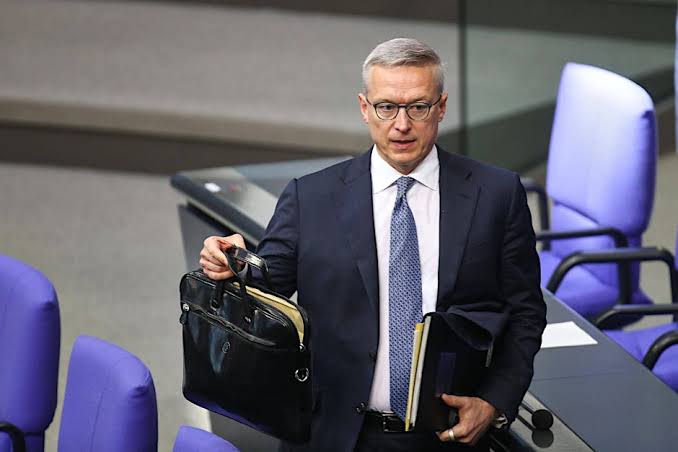
Karsten Wildberger in a navy suit holding a black leather briefcase and folders, standing among blue seats in the Bundestag plenary chamber
In the Bundestag plenary chamber.
CASE01

AI-drafted speeches and articles

June 2026

What happened

Around 13 June 2026, Die Zeit reported, based on software text analysis, that several texts published under his name were largely or entirely AI-generated: a Handelsblatt guest article (April 2026), a Frankfurter Allgemeine Sonntagszeitung guest article (March 2026), the Atlantic Council speech (July 2025) and several Bundestag speeches.

His documented position

The ministry confirmed he uses AI as a support tool. According to ZDF, a spokesperson said no separate disclosure was made because the minister regards AI as a supporting work tool, no different from word processing, and a person must examine, modify and decide on its output.

Critics' arguments

Critics argued that readers and parliament should know when texts by a public official are machine-written. Reports on how the newspapers responded differ between sources and are not repeated here.

Context

The case followed similar accusations against Thuringia's Minister-President Mario Voigt. For a digital minister promoting AI adoption, it became a public test of transparency standards.

CASE02

Lobbying concerns at appointment

April–May 2025

What happened

LobbyControl criticised the appointment of a business leader who held association roles — Vice President of the retail association HDE and roles in the CDU-affiliated Wirtschaftsrat — and called on him to give them up. It raised similar concerns about other new ministers.

Outcome

He left Ceconomy on 5 May 2025; the Wirtschaftsrat named a successor as Vice President in May 2025.

Evidence status

No evidence was found of a formal conflict-of-interest proceeding or parliamentary inquiry relating to his former corporate or association roles.

CASE03

Palantir and digital sovereignty

August–November 2025

His documented position

In a Funke interview (3 August 2025) he said the state should use technologies to protect itself and its democracy and invest in them where providers offer them, while adding that Europe should also have companies offering such solutions.

Critics' arguments

Justice Minister Stefanie Hubig (SPD) was reported to be sceptical about Palantir. netzpolitik.org (19 November 2025) argued that his openness contradicted his own emphasis on digital sovereignty.

Context

Police use of US analysis software had been a long-running data-protection controversy in Germany before he took office.

CASE04

Opposition criticism of the ministry

Bundestag, 7 May 2026

Greens

Rebecca Lenhard said he acts as the government's “product manager” rather than taking positions on a digital tax, online child protection and deepfakes.

AfD

Ruben Rupp spoke of a “strategy of short-term showcase successes” and accused him of avoiding controversial issues.

Die Linke

Donata Vogtschmidt called the ministry “a beta version without further update” and criticised privatisation and centralisation.

Coalition voices

The SPD's Johannes Schätzl called for €100 bn over ten years for digital security; the CDU's Ronja Kemmer praised his “right mindset”.

CASE05

Slow start and competence disputes

Summer 2025

What happened

Commentators described his first 100 days as unremarkable, and Der Spiegel reported teething problems and competence disputes while the ministry was being assembled. netzpolitik.org noted that digital identity was initially split between his ministry and the Interior Ministry.

Context

The ministry had to be built from units of six federal bodies; he later described its starting point as “seven people, one mission, an empty office”.

CASE06

Corporate performance

2015–2025

Telstra

He resigned about two months after becoming Group Executive, Retail, citing personal reasons — headlined by iTWire as a “short stint”.

Ceconomy

A July 2022 profit warning cut the earnings forecast and the share price fell sharply; 2022/23 brought a loss and no dividend; the market valuation stayed low relative to sales.

Trade-press assessment

ChannelPartner (May 2025) reported ambivalent industry views of his digital record, with some saying genuine strategic innovations had long been lacking.

Counterpoint

The supervisory board extended his contract early in 2023, and FY 2023/24 showed sales growth of 5.3%. Interim CEO Kai-Ulrich Deissner called his appointment to government a sign of recognition for Ceconomy's progress.

Sources
  1. ZDF, AI use in texts: zdfheute.de
  2. t-online, June 2026: t-online.de
  3. Berliner Zeitung, June 2026: berliner-zeitung.de
  4. ChannelPartner, LobbyControl criticism: channelpartner.de
  5. netzpolitik.org, “Vom Lobbyisten zum Digitalminister”: netzpolitik.org
  6. ZDF, Palantir: zdfheute.de
  7. netzpolitik.org, 19 Nov 2025: netzpolitik.org
  8. Bundestag, topical debate, 7 May 2026: bundestag.de
  9. iTWire, 4 Dec 2015: itwire.com
  10. ChannelPartner, 2022 profit warning: channelpartner.de
  11. Börsen-Zeitung, no dividend: boersen-zeitung.de
  12. ChannelPartner, 15 May 2025: channelpartner.de